


Grange • Expert buying guide
Lamborghini Huracán EVO vs Temerario: V10 or hybrid V8?
Two generations, two distinct characters. Compare the engines, chassis, UK cabins and ownership questions that matter before choosing.

Huracán EVO or Temerario: which experience do you want?
The Huracán EVO AWD Coupé makes its case through a naturally aspirated V10 and an established combination of four-wheel drive and rear-wheel steering. The Temerario Coupé offers a substantially different proposition: a high-revving twin-turbo V8, three electric motors and a newer cabin. Choosing between them is about the experience you value, as well as the acceleration figures.
The recent Temerario Spyder announcement has put the family back in the spotlight. Here, the comparison is specifically the 640 CV all-wheel-drive Huracán EVO Coupé and the standard Temerario Coupé. Huracán EVO RWD, Tecnica, STO and Spyder specifications should not be mixed into it.


V10 versus hybrid V8: the figures that matter
| Coupé comparison | Huracán EVO AWD | Temerario |
|---|---|---|
| Combustion engine | 5.2-litre naturally aspirated V10 | 4.0-litre twin-turbo V8 |
| Quoted output | 640 CV / 470 kW | 920 CV / 677 kW, combined |
| Electric motors | None | Three |
| Transmission | Seven-speed dual-clutch | Eight-speed dual-clutch |
| Driven wheels | All-wheel drive | All-wheel drive with electric front axle |
| 0–100 km/h (0–62 mph) | 2.9 seconds | 2.7 seconds |
Manufacturer figures. CV is metric horsepower; it is not identical to bhp. The Temerario’s 920 CV is combined system output, not the output of its petrol engine alone. These are the specified Coupés, not every Huracán or Temerario derivative.
The EVO’s V10 produces its quoted peak output at 8,000 rpm. Its naturally aspirated layout makes the rising engine speed central to the character of the car.[1]
The Temerario replaces that architecture with a 10,000 rpm-capable V8 and electric assistance; the petrol engine itself produces 800 CV.[3]
Why the new V8 is more than a cylinder-count change
The Temerario’s flat-plane V8 places its turbochargers within the engine’s V. Electric assistance supports torque delivery while the engine builds speed. Two front motors provide the electric front axle; the third motor is integrated with the rear powertrain. This gives Lamborghini additional ways to manage acceleration and traction, alongside the eight-speed transmission.[3]
For a buyer, the useful comparison is response at different engine speeds. In the EVO, consider how much you enjoy building revs and hearing the V10’s progression. In the Temerario, consider the combination of electric response, turbocharged thrust and the V8’s unusually high operating range. A short drive spent only in a gentle setting will not explain the full distinction.
Lamborghini quotes a 0.2-second advantage to 100 km/h for the Temerario. That is useful context, but it cannot capture how either engine responds to a small throttle input or how the soundtrack develops. A hybrid badge alone tells you very little about this particular car.[2]


Steering and cornering: understand the different tools
The Huracán EVO uses electrically assisted steering, variable-ratio Lamborghini Dynamic Steering and rear-wheel steering. Its LDVI vehicle-dynamics controller coordinates the chassis systems. It is therefore already a sophisticated car; describing it as a purely mechanical predecessor would miss much of what makes the EVO distinctive.[1]
The Temerario also uses electric power steering, but adds front-axle electric torque vectoring to its dynamics toolkit. Its LDVI 2.0 control strategy can coordinate the electric drive and braking to manage the car’s behaviour. The important distinction is how it controls the forces at the wheels; do not assume every successor simply carries over the EVO’s rear-wheel-steering hardware.[2]
During a demonstration, pay attention to how each car turns into a familiar corner, how much steering input it needs and how settled it feels over uneven surfaces. The answer should come from the particular car, tyres and conditions, rather than a claim that one steering system is universally better.

Everyday use: sit in the actual UK car
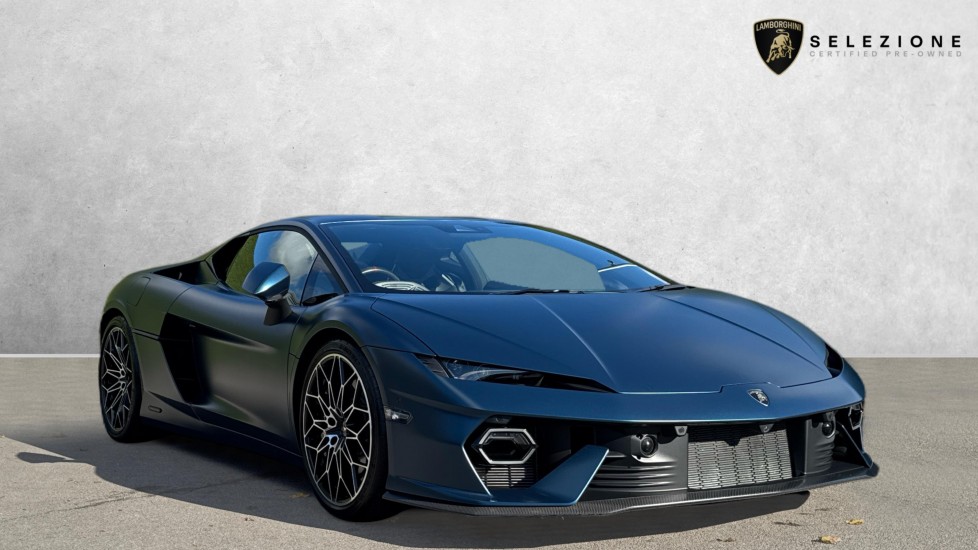
The right-hand-drive photographs below make the generational change clear. The EVO places its main touchscreen low in the centre console. The Temerario introduces a more extensive digital interface and a revised cabin layout. Equipment and seats vary: the optional passenger display or particular bucket seats should not be assumed to be included on every example.
In his 2 February 2026 UK road test for PistonHeads, Nic Cackett described the Temerario as “formidably fast and formidably loud” and noted its more accommodating cabin and strong forward view. His car had optional Alleggerita bucket seats, so its seating observations should not be treated as a verdict on every Temerario specification.[4]
Use that review as an informed reference, then assess entry and exit, seat support and the view from your own driving position. Try the controls you will use frequently. That is especially valuable when moving from the EVO’s familiar interface to the Temerario’s broader range of settings.


On circuit: compare consistency as well as peak performance
Track use places greater emphasis on braking feel, tyre condition and the repeatability of performance. The EVO’s V10 and seven-speed gearbox offer a different rhythm from the Temerario’s hybrid system and eight-speed transmission. Battery state, temperature, selected mode and energy management can affect how a hybrid deploys its performance.
A useful supervised assessment looks at several corners and braking zones, not one launch. Compare how confidently you can place the car and how consistently it responds. Confirm the preparation and warranty conditions for any proposed track use; a road-car warranty should never be assumed to cover every circuit activity.
UK prices: separate an asking price from a new-car quote
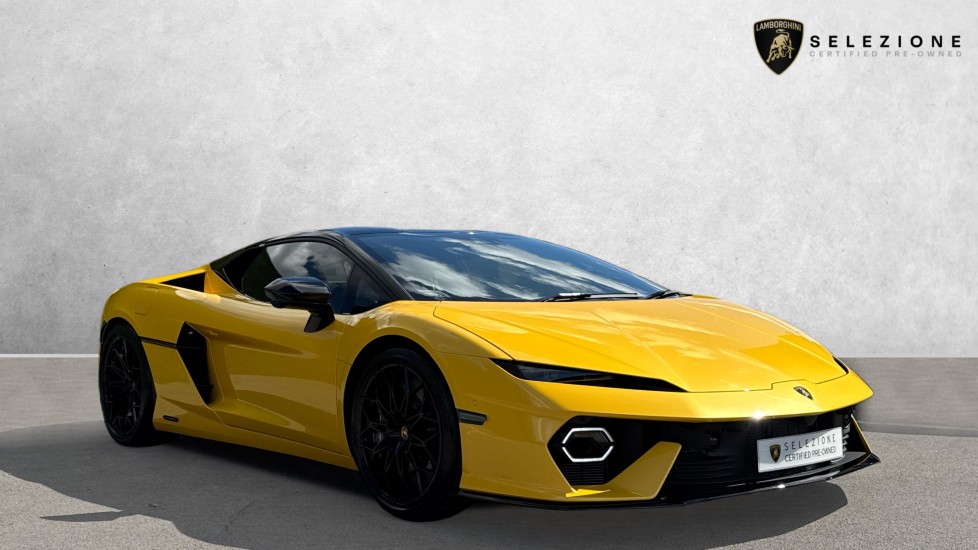
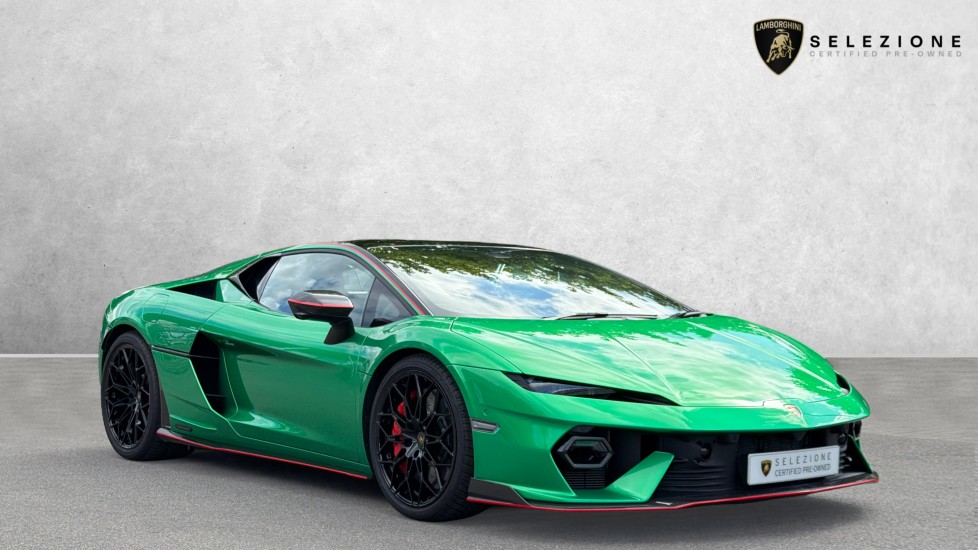
On 25 November 2026, Grange listed a 2026 Temerario with 564 miles at £296,490. That is a specific pre-owned asking-price example, not a new-car starting price or a market average. Other specifications can differ significantly, particularly where extensive options are fitted.[5]
The photographed EVO was marked reserved when checked, so it would be misleading to present it as immediately available stock. Use Grange’s current Lamborghini stock to see what is offered now, then request the specification and a written quotation for the car you want. For a new Temerario, discuss a current configuration and price rather than relying on a historic launch figure.
How does pre-owned Lamborghini warranty cover work?
Grange’s Selezione Lamborghini Certified Pre-Owned information describes more than 150 checks and an additional 12–24 months of Lamborghini warranty cover. The programme also provides roadside assistance for the certified-warranty period. Ask the team to confirm whether the particular car is supplied under Selezione and its exact term; not every used listing automatically means 24 months of cover.[6]
Lamborghini separately describes its new-car warranty as three years with unlimited mileage under normal use, subject to market terms. A pre-owned sale does not automatically restart that new-car period. Have the team distinguish remaining manufacturer cover, any Selezione cover, exclusions and the start date in writing.[7]
Your questions, answered
Is the Huracán EVO a V10?
The AWD Coupé compared here has a naturally aspirated 5.2-litre V10 producing 640 CV. The EVO RWD has a different output and should be identified separately.
Is the Temerario electric?
It is a plug-in hybrid combining a twin-turbo V8 with three electric motors, rather than a fully electric car.
Which is quicker to 62 mph?
Lamborghini quotes 2.7 seconds for the Temerario and 2.9 seconds for the Huracán EVO AWD Coupé. These official figures do not replace a broader comparison of engine response, steering and everyday fit.
Explore both generations with Grange Lamborghini
Established in 1956, Grange represents Lamborghini at Chelmsford and Tunbridge Wells. The team can help you compare the exact powertrain, cabin and equipment of a current example, explain its warranty status and arrange the next step. That detail matters when two cars offer such different interpretations of a Lamborghini super sports car.[8]