




INEOS Grenadier • Buying and ownership
Grenadier: petrol or diesel?
The Grenadier offers BMW-sourced six-cylinder petrol and diesel engines. Start with the way you will use the vehicle, then compare their power delivery and the costs of the exact specifications.

At a glance
- Petrol: 286 PS and 450 Nm.
- Diesel: 249 PS and 550 Nm.
- Compare the same body, trim and tyres before deciding.
Two engines, different priorities
Petrol offers the higher quoted power output; diesel supplies more peak torque at lower revs. Decide which characteristic matters to your use, then compare the complete vehicles.
Both are 3.0-litre engines paired with an eight-speed ZF automatic transmission. Choosing diesel is not simply choosing a different trim, and a higher power figure alone does not settle which car will suit you.
Petrol: begin here for the higher power output
INEOS quotes 286 PS and 450 Nm for the B58 petrol engine. Its maximum torque is available from 1,750 to 4,000 rpm in the manufacturer’s technical data.
If the higher power output is a priority, put petrol on your shortlist. Ask to experience its response on a suitable road demonstration, including the slower traffic and open-road stretches you regularly use.

Diesel: consider the lower-rev torque
The B57 diesel is rated at 249 PS and 550 Nm, with maximum torque from 1,250 to 3,000 rpm. Its higher torque arrives at lower revs than the petrol’s quoted peak.
That makes diesel worth exploring if this characteristic is central to your intended use. It does not mean every diesel is automatically the better choice: compare the complete specification and ask the team to explain how the engine and gearbox work together.

Keep the comparison fair
Try to compare the same body and equipment level on equivalent tyres. Otherwise a change in wheel, tyre or seating equipment can become mixed up with your impression of the engine.
For towing or carrying equipment, have the permitted weights checked for the individual vehicle and your intended load. Do not use the torque figure as a substitute for confirming those limits.

Compare running costs on an equal basis
Ask for the current UK manufacturer fuel-consumption figures for the exact vehicles and check the test basis. WLTP figures are laboratory comparisons; the routes, loads and conditions you encounter determine actual consumption.
Then obtain comparable quotations, including your chosen options and a servicing discussion. Keep purchase cost and expected use together, rather than assuming one fuel will always be cheaper for every driver.
Give the team your working week
Explain your regular journey lengths, expected mileage and any trailer or equipment you need to carry. Grange’s INEOS teams can help you narrow down a petrol or diesel specification and arrange a suitable next step.
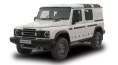
The photographs here show a petrol Fieldmaster listed by Grange. They illustrate that vehicle’s cabin and equipment; confirm the engine, model year and fitted options of any car you choose.
Your questions answered
Which engine has more power?
The manufacturer rates petrol at 286 PS and diesel at 249 PS. PS is metric horsepower, not bhp.
Which has more torque?
Diesel is quoted at 550 Nm, compared with petrol’s 450 Nm. Both figures need to be considered alongside the vehicle’s complete specification.
Does diesel change the gearbox type?
Both engines use an eight-speed ZF automatic. Ask for the exact vehicle specification and a demonstration.
Make your viewing count
Contact the team to confirm the specification you would like to see before arranging your visit.