
Grange · Alpine buying guide
A390: charging for your journeys
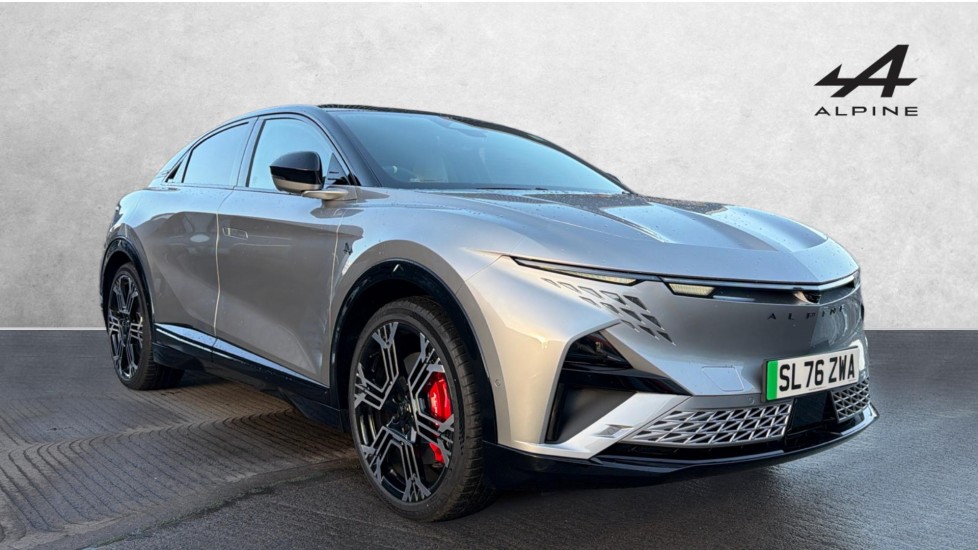
Start with where you park, then consider where you want to go. Make A390 charging part of a specification that fits naturally into your week.

Choose around the places you park
For an A390 that will regularly charge overnight, begin with the home installation. For one that will rely on public charging, look at the actual points near home, work and your usual destinations before choosing the car’s charging equipment.
The useful distinction is between AC destination charging and DC rapid charging. A more powerful AC on-board charger changes what you can draw from a suitable AC point; it does not increase the car’s DC peak.
Will you benefit from 22kW AC?
Alpine’s current UK information lists 11kW AC as standard, with 22kW AC optional. Its UK range page separately lists the 22kW charger in the Première Edition specification. Confirm the hardware on your exact version.
A 22kW AC charger is most useful when your regular destinations offer compatible three-phase charging. It will not turn a 7kW home wallbox into a 22kW supply: the installation, charging point, cable and car all need to support the rate.


GT and GTS have different DC peaks
The current UK A390 information quotes up to 150kW DC for GT and up to 190kW DC for GTS. Both use a manufacturer-quoted 89kWh battery, but the peak charging figure is specific to the version.
Alpine quotes 15–80% in 29 minutes for GT and under 27 minutes for GTS on its current UK charging page. These are manufacturer figures under suitable conditions, rather than a promise for every stop; battery temperature, starting charge and charger performance affect the result.

Take the right cable
Alpine’s UK cable guide lists a 5-metre Mode 3 Type 2 cable for A390. This is the cable to check for an untethered AC charging point; a tethered wallbox has its own lead.
For DC rapid charging, the cable is attached to the charging station. During handover, ask the team to show you the connections and cable storage, then practise starting and ending a charging session.

Plan the stop as well as the route
Alpine-Portal with Google built-in supports electric route and charge planning through Google Maps. Bring a longer journey you regularly make and ask the team to demonstrate how charging stops appear on the route.
Alpine also describes its Plug Inn charge pass and the My Alpine app for finding compatible points and checking prices. Check the current tariff before each session; a pass gives access, rather than one universal charging price.

The right specification fits your week
Choose the AC hardware around the chargers you will actually use, then compare GT and GTS around the complete driving and equipment package. The higher DC peak is one part of that decision.
For your first longer journey, allow time to become familiar with the car’s predictions and the charging network. Manufacturer range and charging figures are useful comparison tools; your own routes, weather and driving determine the experience.

Explore A390 with Alpine Edinburgh
Bring your parking arrangements and a typical longer journey to Alpine Edinburgh. The team can help you compare the charging specification, demonstrate route planning and discuss a suitable appointment.
Your questions answered
Does an A390 always charge at 22kW AC?
No. Check the on-board charger fitted to the exact car. Alpine lists 11kW as standard and a 22kW option, with 22kW separately listed for Première Edition. The charge point and electricity supply must also support the rate.
Does the 22kW option make rapid charging faster?
It changes AC capability. The current UK GT and GTS DC peaks are up to 150kW and 190kW respectively; the car will not maintain its peak throughout a session.
Do I need my own cable at a DC rapid charger?
No. The rapid charger has an attached cable. Check the Type 2 cable supplied with the car for untethered AC charging.